
Meet the Founder
Maithili Jha
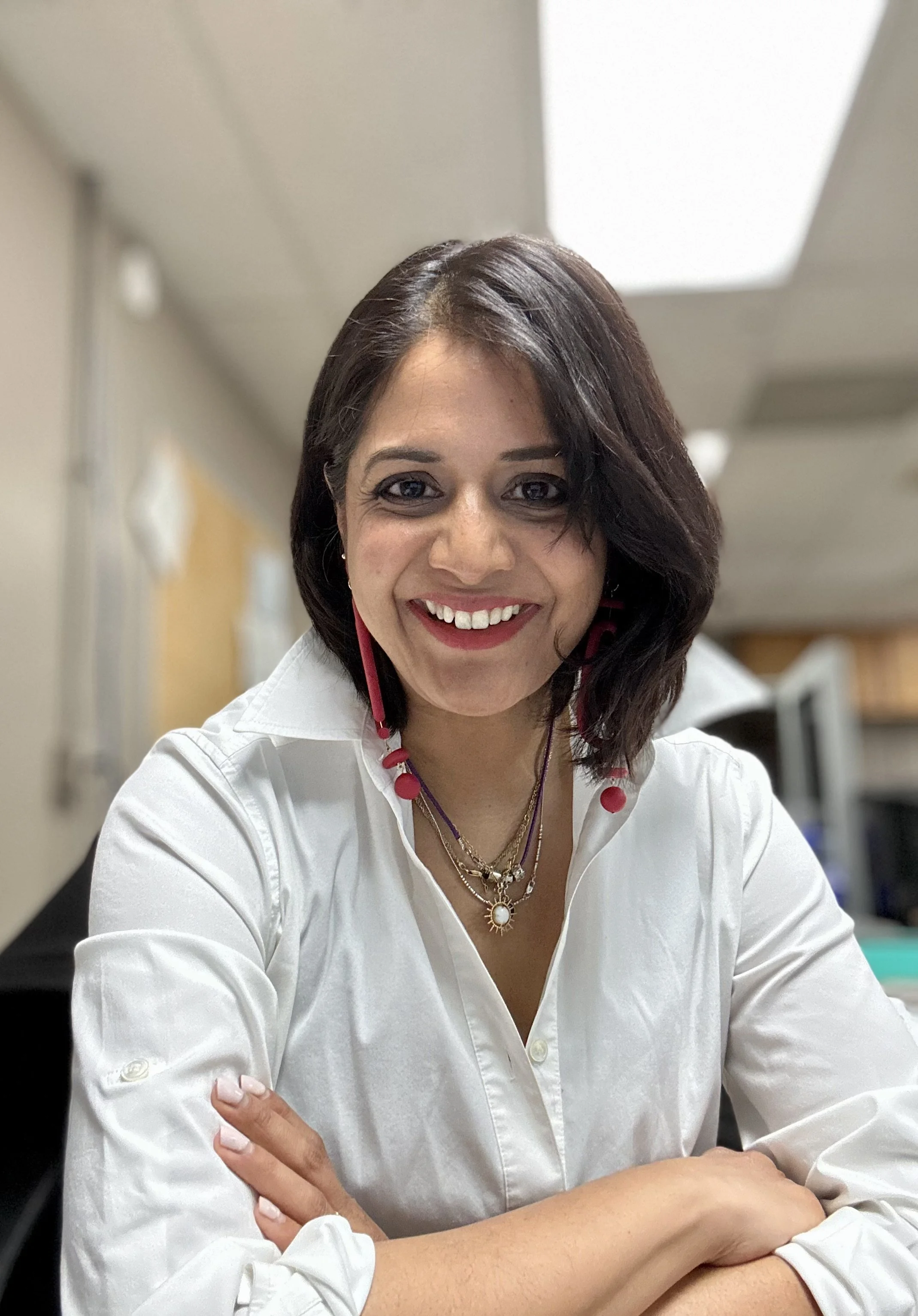
My career has been shaped by a persistent curiosity to understand how systems work and what determines whether good ideas succeed in the real world. That curiosity began while studying biomedical and electrical engineering at the University of Rochester, where I was fascinated by our ability to explore, understand, and measure signals within the body. It has guided every step since, leading me to ask progressively broader questions about technology, markets, healthcare, policy, and organizations—not as separate fields, but as interconnected parts of the same system.
Early roles in sales, business development, and new product introductions expanded that perspective. Understanding how products were developed led to a deeper question: what determines whether innovation succeeds once it enters complex organizations, markets, and healthcare systems? That curiosity led me to earn a Master of Public Health from Boston University, focusing on pharmaceutical policy and management.
Over the past 20 years, my work has spanned clinical trial performance, fundraising and partnerships for the UN Refugee Agency, healthcare advocacy, and more than a decade at the American Medical Association. Healthcare innovation remains my deepest area of expertise, but the questions that drive my work extend well beyond healthcare: How are systems designed? What incentives shape decisions? How do organizations translate strategy into measurable results? And ultimately, who benefits from them?
Over time, one principle became increasingly clear: the quality of execution depends on the quality of the decisions that come before it. Strong solutions emerge when assumptions are identified and challenged early, and organizations bring the right expertise into the conversation before decisions become action. Once decisions become embedded in systems, products, policies, and organizations, they become far more difficult to change.
Another lesson emerged alongside it. The strongest solutions rarely come from a single discipline. Some of my most valuable insights have come from connecting expertise across engineering, healthcare, policy, business, advocacy, manufacturing, and the arts. Bringing different forms of expertise into the same conversation strengthens strategy by identifying assumptions, revealing opportunities, and improving the quality of decisions before execution begins.
Those principles became the foundation for Manima Consulting.
Thinking Upstream. Acting Downstream.
Manima helps organizations make better decisions before they become expensive to change.
Healthcare innovation is where this work began, but the underlying principles apply wherever organizations are navigating growth, complexity, and execution. Whether the challenge involves markets, operations, technology, human capital, or strategy, the work centers on understanding what drives outcomes and translating insight into measurable action.
Equity is a core design principle in this work. Every decision about strategy, resources, technology, measurement, and organizational design shapes outcomes and influences who benefits from them. Examining those dynamics strengthens decision-making, execution, and long-term results.
Outside of work, you'll usually find me in the art studio, boxing, exploring nature, spending time with my husband, children, and large extended family, or advocating for causes I care about throughout the Chicagoland area.
THE MANIMA FRAMEWORK
My approach is grounded in a principle from Start with Why by Simon Sinek: “People don’t buy what you do; they buy why you do it.”

Clarifying Purpose & Priorities

Designing Systems & Execution

Delivering Measurable Outputs

Outcomes Evaluating impact
My lens
A multidisciplinary approach to complex challenges
Engineering
I bring an engineering lens to understand how systems are designed, built and function.

Public Health
I apply a public health lens to focus on real-world outcomes, adoption, and impact at scale.

Equity
I center equity to ensure design choices don’t just drive results, they determine who benefits and who is left out.